5 min read
Cruise Tips
Alaska Cruise for First-Timers: What the Brochures Skip
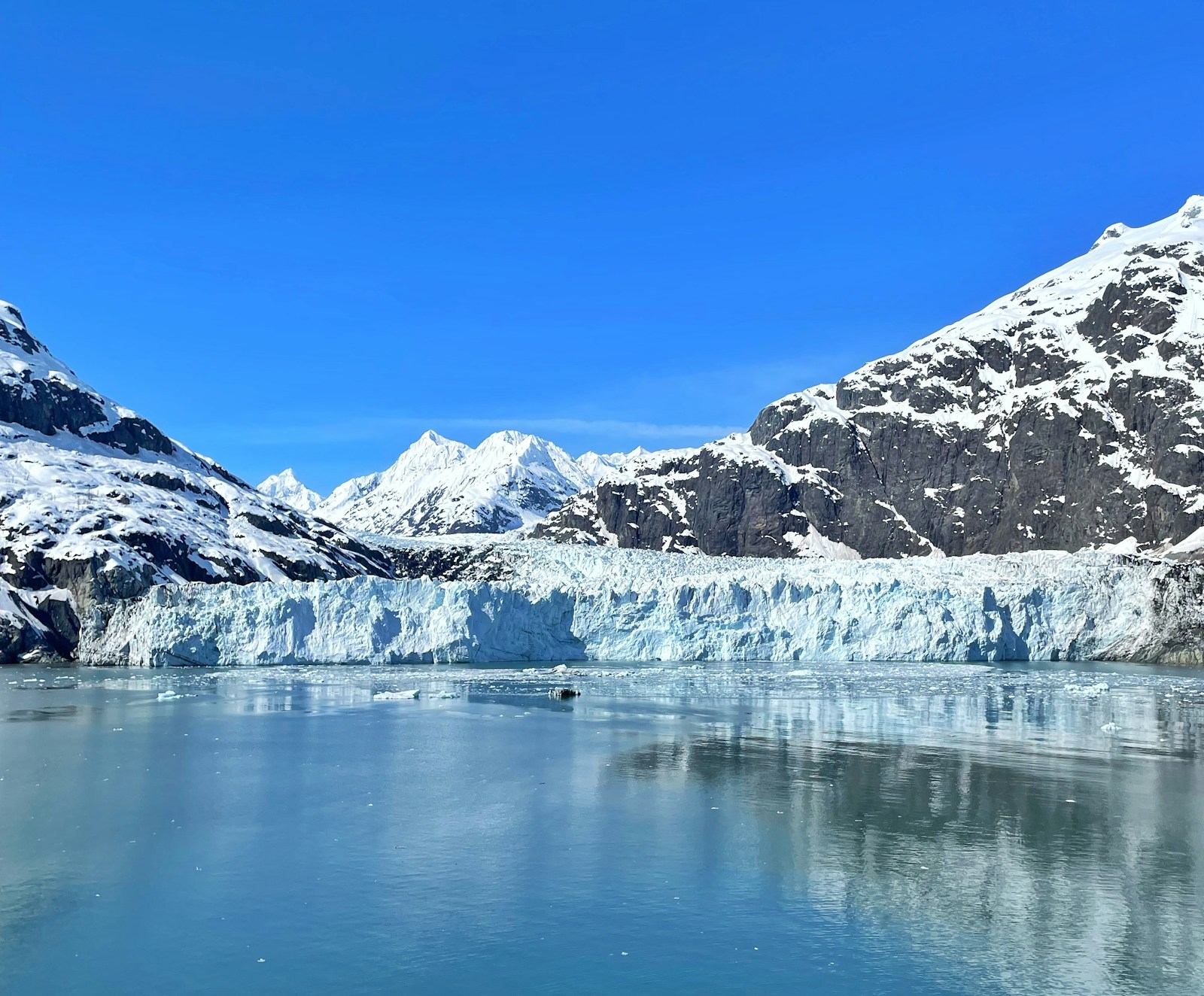
The Alaska brochure shows a whale breaching in front of a glacier under a blue sky. You can get that photo. You are more likely to get it if you know the things the brochure leaves out.
The season is short, and each month is a different trip
Ships call in Juneau from late April to early October. In 2026 the first ship docked on April 27 and the last is scheduled for October 6.
May is dry and cool, about 58°F in Juneau with 3.5 inches of rain. July is the warmest at 64°F with 5 inches. September drops to 56°F with 9 inches of rain in Juneau and 14 inches in Ketchikan, one of the wettest towns in America in any month.
Wildlife follows the same calendar. Humpbacks are around Juneau from April to November and thickest June through September. Bears are easiest to see in July and August when the salmon run, on a floatplane trip from Juneau to Pack Creek. The northern lights are a winter show. A summer cruise will not see them, and a late-September sailing has only a slim chance.
Price follows the weather. A 7-night balcony that runs about $2,450 a person in July can be $1,100 in May or $1,200 in September, according to one booking site's 2026 tallies. Those are ballpark numbers, but the shape is right: May and September cost roughly half of July.
Round trip or one way
A round-trip Inside Passage cruise from Seattle or Vancouver is 7 nights and gets you Juneau, Skagway, Ketchikan, and a glacier day. A one-way Gulf of Alaska cruise between Vancouver and Whittier or Seward adds more scenic cruising and is how you attach a land tour to Denali, which turns the trip into 9 to 13 nights.
The glacier day is where itineraries differ. Glacier Bay National Park allows only two ships a day, and the permits through 2029 belong to Princess, Holland America, Norwegian, Cunard, Seabourn, and Viking. Park rangers board the ship for the 9 to 10 hours inside the bay and run a Junior Ranger program for kids. Royal Caribbean, Celebrity, and Disney go to Hubbard Glacier or Dawes Glacier in Endicott Arm instead. Dawes is a 600-foot wall of ice that ships can approach closely, and Hubbard is 76 miles long. Neither is a consolation prize, but if Glacier Bay is the reason you are going, the line has to be one of those six.
Seattle round trips stop in Victoria, Canada, on the way home. That is not a bonus port. A law from 1886 requires foreign-flagged ships sailing round trip from a US port to call at a foreign one. Victoria is pleasant, and you will usually get there in the evening; Butchart Gardens stays open late on ship days and is a 75-minute ride from the pier.
The passport question
A closed-loop cruise, one that starts and ends at the same US port, lets US citizens board with a government photo ID and a birth certificate. I still tell every client to bring a passport. If you miss the ship in Canada, or need to fly home from Juneau for an emergency, a birth certificate does not get you on a plane. Any cruise that starts or ends in Vancouver requires a passport outright.
Which side of the ship
The ships turn a full circle at Hubbard and Dawes, so every balcony sees the glacier. For the scenic sailing days, the coast is on the starboard (right) side heading north and the port (left) side heading south. Celebrity's guide says that. Norwegian's blog says the opposite, and Celebrity has the geography right.
Is the balcony worth it? On a 7-night sailing in 2026, inside cabins run about $500 to $900 a person, oceanview $800 to $1,200, and balconies $1,500 to $2,500. In Alaska I say yes if the budget has it. You will be on that balcony at 6 a.m. in a robe watching a glacier, and the top deck is windy and shared. If the budget does not have it, book an oceanview and spend the difference on one flightseeing excursion.
What the ports cost
In Juneau, whale watching starts at $155 for three hours, or $199 combined with the Mendenhall Glacier. The glacier shuttle alone is $65. In Skagway, the White Pass rail summit trip is $155 for adults and $77.50 for kids, about two and a half hours, no passport needed, and the National Park Service runs free ranger walks through town. In Ketchikan, the Misty Fjords floatplane is $371 a person for an hour in the air; Creek Street is a free ten-minute walk from the pier. At Icy Strait Point, the ZipRider is 5,495 feet long with a 1,320-foot drop and runs around $200, while the shoreline walk to Hoonah is free and a mile and a half. In Sitka, Fortress of the Bear is $20 and uses timed entry on busy days, and the totem trail in Sitka National Historical Park is free.
Port fees and taxes add $150 to $300 a person to a 7-night fare. Gratuities in 2026 run $18 a person per day on Princess, Holland America, and Celebrity, $18.50 on Royal Caribbean, $20 on Norwegian, and $16 on Disney. Wi-Fi is $20 to $30 a device per day, and there is no cell signal between ports. Budget for those before you budget for excursions.
Motion, rain, and the bag
Seattle round trips spend two days on the open Pacific. Vancouver round trips stay behind Vancouver Island and are calmer. The Gulf crossing on a one-way adds a night of motion. If you get seasick, sail from Vancouver.
Pack three layers: a wicking base, a fleece, and a waterproof shell. Waterproof shoes. Binoculars, because the ship will not lend you any. Temperatures can swing from the 30s to the 80s on one trip. Most lines have one formal night.
When to book
Princess runs the most Alaska capacity in 2026 with eight ships, then Holland America with six, Royal Caribbean with four, and Disney with two. Royal Caribbean's booking guide says 12 to 18 months out for Alaska, and I agree; the balcony cabins on the good side go first. Princess now takes a $300 per person deposit on 7-night sailings with final payment 120 days out for bookings made from September 2026. Royal Caribbean takes $250 a person with final payment at 90 days.
Juneau capped cruise visitors in 2026 at 16,000 a day Sunday through Friday and 12,000 on Saturdays, down from peak days above 21,000. Fewer people in port is good for you. Fewer available berths is a reason to book the year before.
Tell me which month you can travel and whether you get seasick. That narrows it to two itineraries.
Sources

More Articles